

“I wanted this track to feel like a long, hypnotic journey” Hermetics interview
On his remix of Oora’s And Then, It Faded, Bogotá-born producer Hermetics takes a moment of quiet introspection and

On his remix of Oora’s And Then, It Faded, Bogotá-born producer Hermetics takes a moment of quiet introspection and turns it inside out.
The original, recorded live by Italian artist Oora using a Vermona Perfourmer and Minimoog, is a study in restraint: looping synth figures, soft distortion, a mood that hovers somewhere between nostalgia and resolve. Hermetics hears something else in it. His version folds in broken percussion, shuffling groove and a low-slung swing that never fully settles. It’s still reflective, but the contours are sharper, the space around it more unstable.
Since his early records on R&S and ZZK, Hermetics (aka Santiago Niño) has explored electronic music as a form of ritual and renewal. His work across labels like Multi Culti and Optimo Music leans into rhythm as a tool for transformation. Here, he uses it sparingly. The remix doesn’t overwrite OORA’s minimalist structure. Instead, it picks out new weight in the silences and repetition, teasing out latent tension.
We caught up with him for a chat.
The original is all soft edges and analogue warmth. Your version adds a shuffle and just enough grit. Was there ever a version that went too far—too heavy, too digital, too much?
No, from the very beginning I knew I couldn’t overshadow the purity of the original melody. I pushed it only as far as it could go, without ever compromising its essence.
The drums in your remix feel like they’re half-remembering a groove from somewhere else. Were you pulling from a specific rhythmic reference or just letting the track tell you where it wanted to land?
I wanted the groove to stay as simple as possible while still having attitude, so I focused more on its texture than its complexity. I was aiming for something dark, raw, yet subtly nuanced—and that’s what came out in the end. I also had UK Garage in the back of my mind throughout, as I felt that kind of percussion would perfectly complement this kind of atmosphere.
This isn’t a high-impact remix in the usual sense—no big breakdowns, no dopamine spikes. Was that a conscious move against expectation, or just how you tend to hear music like this?
I wanted this track to feel like a long, hypnotic journey—something that slowly pulls you in without unnecessary extravagance. When you know you have something truly powerful and profound, there’s no need to add fireworks. It’s an approach I’ve been leaning into more and more lately, though not always—this remix, in particular, just seemed to call for it.
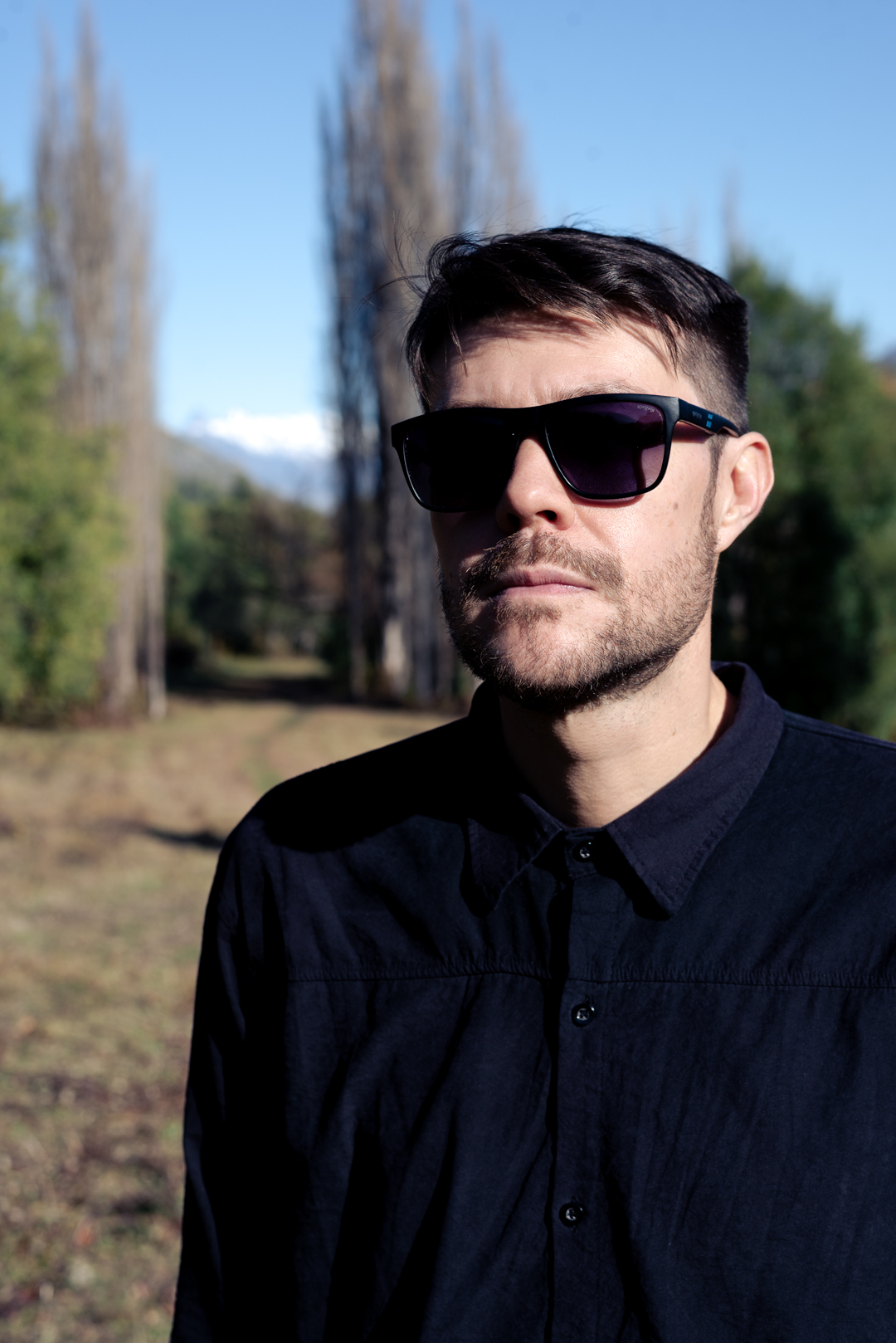
You mentioned being drawn to the honesty in Oora’s live jam. As someone who works more in the studio, do you ever wish you could just plug in and play, imperfections and all?
One of my biggest frustrations is that I never learned to play the keyboard or any instrument, nor did I study music theory—I just rely on having a good ear. I genuinely admire, and yes, even envy (in the best possible way), producers who can just sit down, play, and improvise so effortlessly. I wish I had that kind of fluency. But I’ve made peace with it and instead focus on what I can do—shaping rhythms, crafting atmospheres, and exploring sound through experimentation.
You’ve released on Multi Culti, Optimo, ZZK, R&S… which of those past releases feels most aligned with this remix?
I feel that the music I released on R&S is closer to this remix—it’s hypnotic, long-form, and leans more toward a tech-trance, dancefloor-driven atmosphere than what I’ve released on other labels.
There’s something pleasingly unresolved about the remix—it doesn’t try to land a point. Is ambiguity something you aim for in your productions, or just where you often end up?
To be honest, the idea of something being “pleasingly unresolved” is not something I’d really thought about, but it intrigues me. Maybe it ties back to what we talked about earlier—the absence of fireworks. Perhaps my music naturally leans that way for a reason. Your question has me wondering—I’d probably need to revisit my past tracks to see if there’s a recurring pattern (lol). Maybe it’s connected to that hypnotic quality I often mention, where the music doesn’t need to reach a final destination, and the real joy is in the journey rather than the arrival.
Bogotá’s scene doesn’t always get the same visibility as other Latin American hubs. Are there producers or labels back home who’ve shaped how you think about rhythm or atmosphere?
These days I’m based in Argentina and have spent time in other countries as well, so I’m not really connected to the local Bogotá scene anymore. I’ve come across some incredible Colombian producers, but I wouldn’t say any of them have had a direct influence on my work.
You’ve said you felt something shift when you watched Oora’s video. Was that an emotional shift, or more of a producer moment where you thought, “I know exactly what I’d do with this”?
Oora’s music carries a sense of minimalism, honesty, simplicity, and depth that speaks straight to my soul. When I first heard the original track, I knew it was already perfect—it didn’t need a thing. But then, almost instinctively, rhythms began forming in my head, and I felt an undeniable pull to turn it into a dance version. It wasn’t a decision—it was a calling.
If someone dropped your remix in a peak-time set, would you be into it—or does this one belong somewhere slower, stranger, and less full?
I’d love that—I’ve always pictured it echoing through a massive festival crowd. It has that big-room energy, and I don’t think it would quite fit the vibe of a smaller, more intimate party.