

“Sometimes if you overthink art, it loses its spark” Hatiras interview
Hatiras has been a fixture of house music for decades, but his latest single, Hypnotized, feels anything but nostalgic.

Hatiras has been a fixture of house music for decades, but his latest single, Hypnotized, feels anything but nostalgic. Instead, it channels the physical energy of early raves into something slick, strange, and low-slung.
In this interview, the Spaced Invader producer reflects on his DIY roots, staying creatively sharp in a digital age, and why genre boundaries have never really interested him. As ever, he’s focused on the dancefloor—only now with hundreds of releases, his own label, and a sharper sense of how to mess with minds in the mix.
You came up through the early North American rave scene, which had its own raw and DIY energy. How does that early environment still shape the way you approach music today, especially with a track like “Hypnotized”?
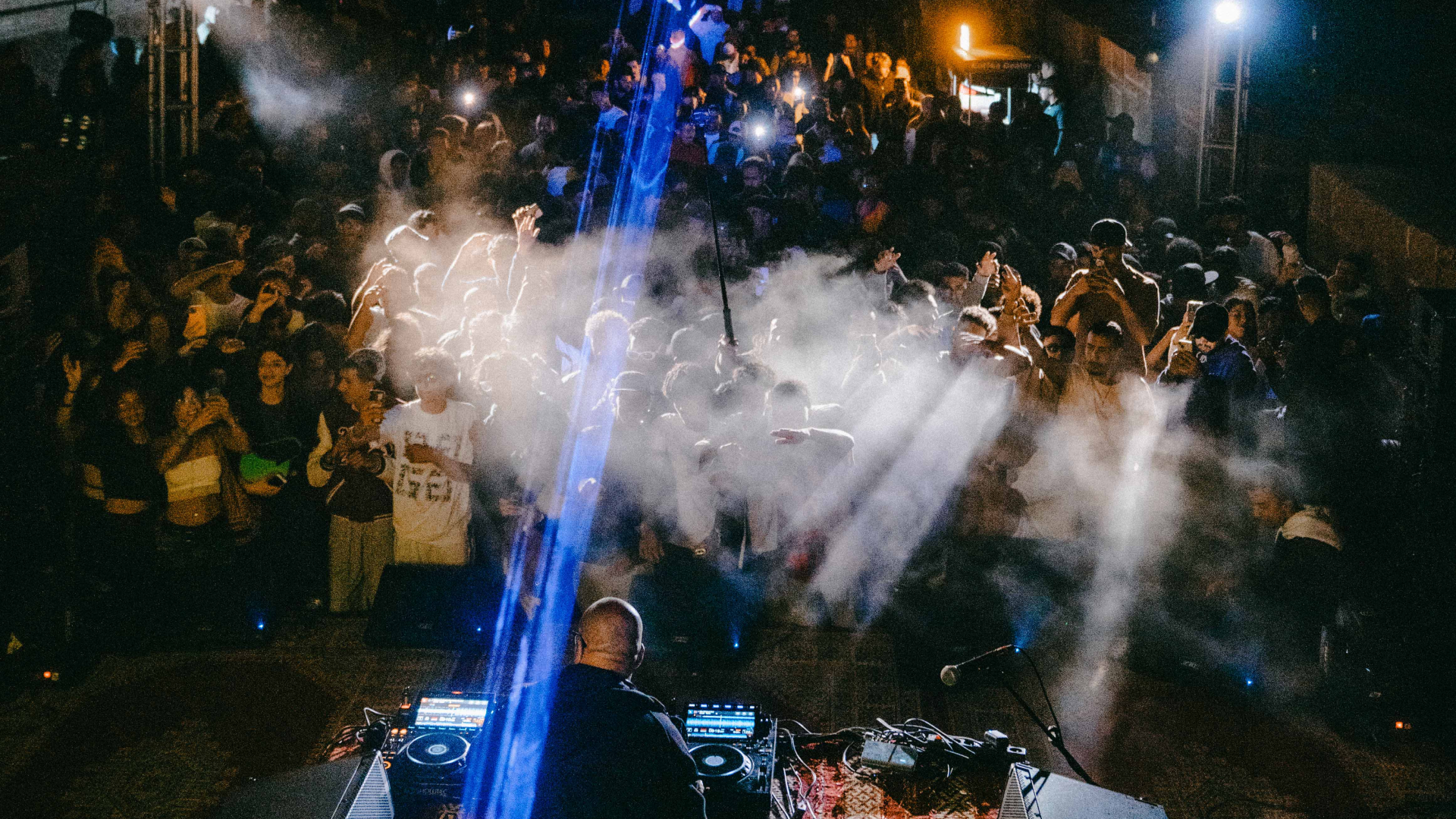
The early rave scene was all about going against the grain of mainstream culture. It was a niche, underground community where the music was always dancefloor-driven, very physical, and truly came alive on a proper sound system with subwoofers.
With “Hypnotized,” I designed the tune with an escapist, deliberately hypnotic energy in mind. I paired that with deep, rolling sub-bass and an elevating arrangement to make you feel like you’re being abducted from a frenzied dancefloor into a strobe-light ragga rave spaceship.
“Spaced Invader” became a defining track for a whole era of house music. When you revisit that moment now, what stands out to you most?
What stands out to me most is that “Spaced Invader” was one of the first tunes I ever produced. I didn’t know music theory at the time and had very minimal tools—just a sampler, a drum machine, a tape recorder, and a basic Atari computer with MIDI.
The message is: you don’t need to know all the rules or have the best gear to make great art. You just need to create something authentic that represents an emotion or feeling. If it feels raw and real to you, chances are others will feel it too. Sometimes, if you overthink art, it loses its spark. The best stuff often comes quickly and from a real place.
You’ve released over 500 tracks across a wide range of labels. How do you decide what belongs where? Does a label like Toolroom pull something different out of you compared to Dirtybird or Farris Wheel?
Each label has its own distinct sound and vision. I release most of my music on my own label, Spacedisco Records, which has also featured over 150 other artists.
When I’m aiming for a specific label, I pay attention to what unifies their catalog—tiny production details, arrangements, energy levels. For example, a Dirtybird track is usually more synth bass-heavy, minimal, and quirky. Toolroom tends to have busier drums and more of a rushy, peak-time energy and flow.
That said, I never start by thinking about a label. I make what feels right, and then I tweak and refine it to fit where it might belong.
Mark Knight (Toolroom) says it best: “Make music you love and be authentic.” That’s exactly what I do when I produce music: Channel what the universe flows through me, make what I love, and go from there.
“Hypnotized” has been a secret weapon on USBs for a while. What’s your take on exclusivity in DJ culture? Do you enjoy holding tracks back?
I’m not a gatekeeper like that. When I make DJ mixes, I always try to list every track so producers get credit and people can support them. It’s vital that producers are recognized for their work and a bit sad that many of them stay in the shadows while loud personalities get all the fame and attention.
Sending promos to big DJs is important for exposure, but once a track is released, I want everyone to enjoy it. Music is for the people.
You’ve moved between underground credibility and global recognition throughout your career. Has your relationship with commercial success changed over time?
I’ve never changed what I do or who I am. I’ve been doing this over 30 years and never get too high or too low. I feel like I’ve been put on this planet to make fun music, throw parties, bring people together, and share positive, uplifting energy. I don’t chase commercial success—or even really think about it. In my mind, I’m still the same innocent kid making tunes in my bedroom studio. Staying raw and authentic is the only way I know how to be.
The title “Hypnotized” suggests a trance-like state or immersion. Was there a specific feeling or inspiration you were trying to capture?
Absolutely. I might be a producer and label owner, but I still go to a ton of events and lose myself on the dancefloor to feel the energy and stay connected to the scene. “Hypnotized” was somewhat inspired by “Spaced Invader,” but also inspired by all the parties I’ve gone to recently (for example Detroit’s Movement Festival, etc).
When I produced it, I wanted to channel that underground feeling of elevation, elation, relentless groove, and hypnosis. I wanted it to move people and lift them higher. I also added some slightly strange and subtle riser sounds in there to really mess with people through frequency. The original title of the tune was “Elevation Spell” before I added the vocals and decided to call it “Hypnotized” – I’d say both titles are appropriate.
A lot of younger producers are just discovering “Spaced Invader” and its legacy. Do you feel pressure to live up to past work, or does it give you more freedom to evolve?
Zero pressure. Since “Spaced Invader” came out, I’ve been relentlessly making music for the love of it and never slowed down.
I remember watching a Stevie Wonder documentary many years ago that said he’d made over 1,000 songs. That really stuck with me and blew me away. That’s a huge catalogue and an extremely prolific artist. True artists create because they have to—not to chase coolness, money, or clout.
That’s been my approach: keep going, have fun, be free, make what resonates with me, and don’t put limits or expectations on it. I’m also only about half way there – still at least 500 tunes to make which will probably be another decade or more.
With so many years and releases behind you, what keeps you creatively sharp? Is it studio habits, collaboration, or just staying curious?
Staying plugged into the scene keeps me sharp. I go to shows as a fan, not just a performer. Some artists lose touch by boxing themselves into one sound. I love attending parties and festivals and exploring every genre—from techno to drum & bass, house and beyond.
Creatively, I try to keep the pressure low. I have a “garden” of half-finished ideas and sounds going at all times. I plant seeds, revisit them later, and decide what to harvest or complete.
I also challenge myself to release something weekly through my label Spacedisco Records. That helps keep the creative muscles strong.
You’ve seen major shifts—from vinyl to digital, and from warehouse raves to global festivals. Which change impacted you most as an artist?
The shift to digital was the biggest game-changer. Back in the day, you had to physically go to record stores to find music. Now, with instant access to sounds, software, and tools, it’s easier to create—but also easier to get overwhelmed. These days, the skill is to distill. As for events, there’s still a healthy mix of underground parties and massive festivals. I love playing at, attending and support both, but my heart will always be with the underground.
You’ve worked across many house subgenres. Where does your sound sit today—and do you even think about genre boundaries anymore?
Since launching Spacedisco Records in 2016, my sound has focused on that classic late-‘90s/early-2000s Jackin’/Chicago House/French Touch style—with funky sample chops, phat swinging drums, and an uplifting energy. With that said, I’m always experimenting. I have plenty of unreleased techno, tech house, quirky club tracks, and bass-heavy tunes sitting on my hard drive. It’s all part of the journey and I honestly don’t know what I’ll be creating or releasing next.
Overall though, I tend to go back to sounds that are funky or soulful. My music is always DJ and dancefloor-friendly, and I’m meticulous about how it sounds. It needs that raw, retro vibe—but the production and mastering have to be absolutely perfect to the tiniest sound and thump just right.
Hypnotized is out now on Toolroom